

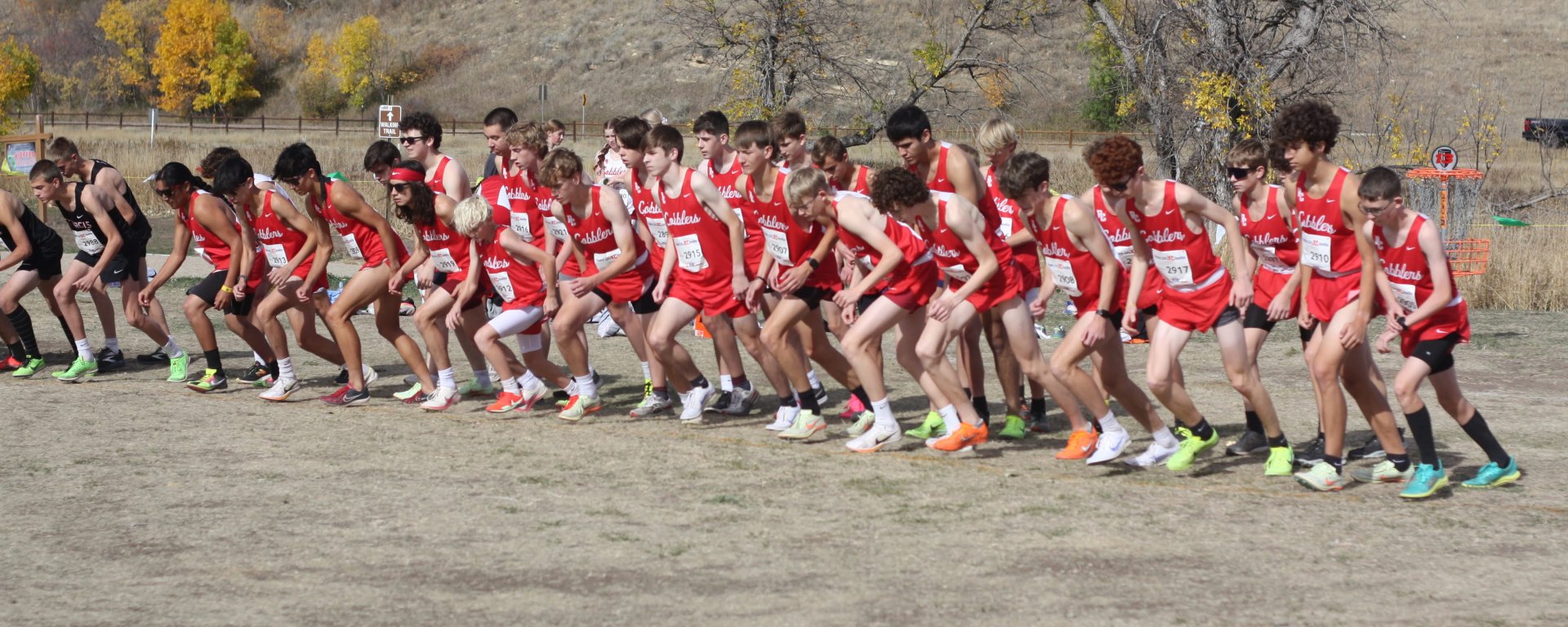
In cross country, you run hard even when you can’t see the finish line.
During late September of 2019, I stepped onto the soccer field at East Middle School on a hot afternoon. I was there for cross country, a sport I’d never even heard of but one my dad was in as a kid. I awkwardly stood against the fence while kids around me jabbered away. Soon enough, our coach led us through a series of stretches, and we were let loose to do our “normal run.” All I remember about it was that it was pure pain. I made it to the end only after numerous multi-minute breaks. By the end, I was uncontrollably coughing, profusely sweating, and sorer than I’d ever felt. I left practice that day telling my parents that I didn’t like it and that it just wasn’t for me. My dad encouraged me to keep going and to at least make it through the first race. Little did I know that his small push would keep me running on my own accord for the next six plus years.
There’s a reason that running is punishment for players in other sports: it’s extremely hard. It’s the reason why I wanted to quit after my first practice and even after the first few races. Unlike other sports, cross country isn’t focused on technique but rather pure and hard work. Of course, there’s an art to training the right way, but each practice is focused on one thing: making you run faster. For example, in basketball, there are many skills to be learned, from defense to offense to passing to game strategy. This is why most people initially find cross country boring; there’s not much to learn. When you practice other sports, there’s excitement from testing your skills and getting instant feedback, whether it’s drills or scrimmages against teammates. The action of practicing these techniques and seeing how you stack up against the rest of your team is arguably one of the biggest draws of conventional team sports. Cross country, however, is a much slower but more rewarding burn.
In cross country, you lack the instant gratification of a drill or scrimmage. Practices are tough and usually consist of tens of minutes to hours of consistent hard work. The only gratification you feel is once you’ve reached the end and you can look back at what you’ve accomplished. The discipline that it takes to show up every single day and put in miles even though it’s hard is the foundation of a good cross-country runner. You can’t just be motivated by practice being fun or easy; you must know that each practice is a building block in getting you to a better place by the next race. Each race is a chance to show how hard you’ve worked, which is what makes cross country such a rewarding sport. Of course, everyone has bad days, and running is no different, but when you do well, you know that it’s from your hard work. During my first few weeks in the sport, I saw very little improvement, and even after the first few races, I was running a consistent time. But I kept working for the rest of the season and brought down my time by over a minute by the last race of the season, moving from placing in the 70s to placing in the 20s. The satisfaction I felt after that race was unbelievable, and it proved to me that even though it takes time and the gains aren’t instant, you can make improvements with consistent work. But all of this wouldn’t be possible without the team.

Cross country isn’t a team sport in the traditional sense, so I assumed that everyone would exist in their own bubbles, but as it turns out you become pretty good friends with the people you suffer alongside. Waking up early in the morning to attend morning practice is only possible because I know I have buddies to talk me through the run. The same people I count on to get me through the runs also hold me accountable if I start slipping in my training. Just last summer, I skipped a couple of days of practice. On both days, four or more people were messaging me about where I was and asking if I was okay. I told them I didn’t feel motivated to wake up early enough to get out there, but they pushed me to get out the door the next day. Because how you feel on a given day varies so much, the network of friends you build through running keeps everyone motivated. Something I also realized was that missing those days in the summer didn’t just hurt my performance, but it also made it harder for those who showed up. I recalled the days when my friends didn’t show up and how hard it was to make it through the run. There’s a reason our team motto is “Commit Together.” These friends and the perseverance I’ve gained not only have helped me through this sport but also through other aspects of my life.
The skill required to succeed in things like taking college-level classes, learning to code, or even mountain biking relates to pushing forward, even with no visible improvement. Doing chores, planning meals, and running errands all relate to being consistent, even if you don’t want to. Cross country engrains these principles in you. It makes it easier to believe in the process, even if the end isn’t in sight. Running is satisfying because it teaches you to consistently work hard to achieve your larger goals and to do so with the support of people who understand you.
 The Pine Needle