
Hope is what convinced a four-year-old that she had superpowers.
Disney’s Frozen came out when I was four years old, and it quickly became my entire world. I loved it so much that I made my family go to the movie theater half a dozen times before they bought the DVD, which was on a constant loop at our house. All my Christmas gifts and birthday parties were Frozen themed up until I decided I was “too old,” my room decor was all based off the movie, and practically everything I did was related to the story. I’m not sure what it was about the Norwegian ice queen and her sister that made me so obsessed with the franchise. It might have been the fact that there was a ginger protagonist that I somewhat resembled, or maybe it was “Let It Go,” a song that my parents will never forget because of how often it was played, or it could have been the fact that my mom just had my blonde sister and we were like a real-life Anna and Elsa. Yet even with all these considered, I’m pretty sure it was Elsa’s ice powers.
Between my sister and me, I always claimed the role of Elsa. I got the first pick since I was older, but the choice was deeper than that. Elsa’s role resonated with me because I believed I had powers too. Not ice powers necessarily, but something similar. I was certain I could control water with my mind. I just had not mastered it yet.
Like Elsa, I kept this secret to myself. I couldn’t risk anyone knowing. I know now that this isn’t unusual for young children that are trying to distinguish reality and fantasy. Many kids probably remember stretching out a hand and concentrating on an object to test their telekinesis. Still, I was convinced I was different.
Part of what fueled my belief was the fact that I was diagnosed with hyperhidrosis when I was a kid, a condition that caused my hands to sweat excessively. This diagnosis only played into my delusions. It was easier to assume I had powers than a condition that made minor tasks much harder. I couldn’t write normally, shake hands without wiping them off, or do anything that required a normal grip. To me, though, it didn’t feel like a medical condition. It felt like evidence. My hands were powerful. It was easier to believe I was special that it was to believe I was unlucky.
That optimism followed me into school, where I wanted a friend more than I wanted powers. I thought maybe the two were connected. If I revealed my secret, maybe someone would see that it made me unique and think that being friends with me would be worth their time. With this theory in mind, I told one of the girls who sat next to me about my supernatural water powers, and she just looked at me. Later, I saw her whispering to another classmate, and I felt the shift almost immediately. I wasn’t mysterious or interesting. I was strange.
It was a relief to sit at a lunch table without wondering if people liked me. But being liked was not the same as being known.
At recess, while everyone else paired off, I stood alone, trying to reassure myself. I told myself that my powers were still there, even if no one else believed in them. Yet no matter how hard I concentrated, nothing changed. The water didn’t move and my social life didn’t either.
Having an imagination is fun when you choose it. It feels much heavier when it’s all you have. I could imagine having friends that understood me, but when the bell rang and the classroom filled with chatter, I knew I didn’t belong to any of it. Until third grade when we got a new student, and I finally made my first friend.
We were inseparable in the way only elementary best friends can be–sharing secrets on the playground, laughing at inside jokes, building worlds entirely from imagination. Some of the memories I made with her will always be a part of me because that was when I realized I didn’t need powers to be interesting. Being me was enough. I never had a friend as dear to me as Josie-Ann. I learned so much from her, and she changed me for the better. Which is why it hurts to say that I never saw her again after third grade.
Inevitably, we weren’t together forever. I moved schools, and our plans to meet up kept getting postponed–another weekend, another month–until eventually there were no more plans at all, and my long list of updates was thrown away. At my new school, I was determined to not be alone again, so I adapted. I was more reserved, shy, and observant. I would analyze everyone’s sense of humor and cater my jokes to them. My humor became my new superpower, as cheesy as that sounds. I cared less about perfect grades and more about having the right timing.
It was nice to feel liked. It was a relief to sit at a lunch table without wondering if people liked me. But being liked was not the same as being known. I was a performer. I traded my powers for a carefully curated personality. And while everything seemed to be changing, one thing never did: hope.
It was never loud or dramatic. It doesn’t arrive with a soundtrack or a burst of magic. It ebbs and it flows, sometimes barely noticeable. Hope is what convinced a four-year-old that she had superpowers. Hope is what led her to risk embarrassment by sharing her secret. Hope is what made her a best friend and led her to try again in a new school. In many ways, Frozen is what sparked my hope.
I no longer believe I can control water. But I’ve come to understand that my power isn’t in my hands or in the water it is in myself. The person I am is not the one who falls or stands alone at recess. It’s the one who gets up and tries again. The one who keeps hoping even when hope feels small. And maybe that kind of resilience is its own kind of power.
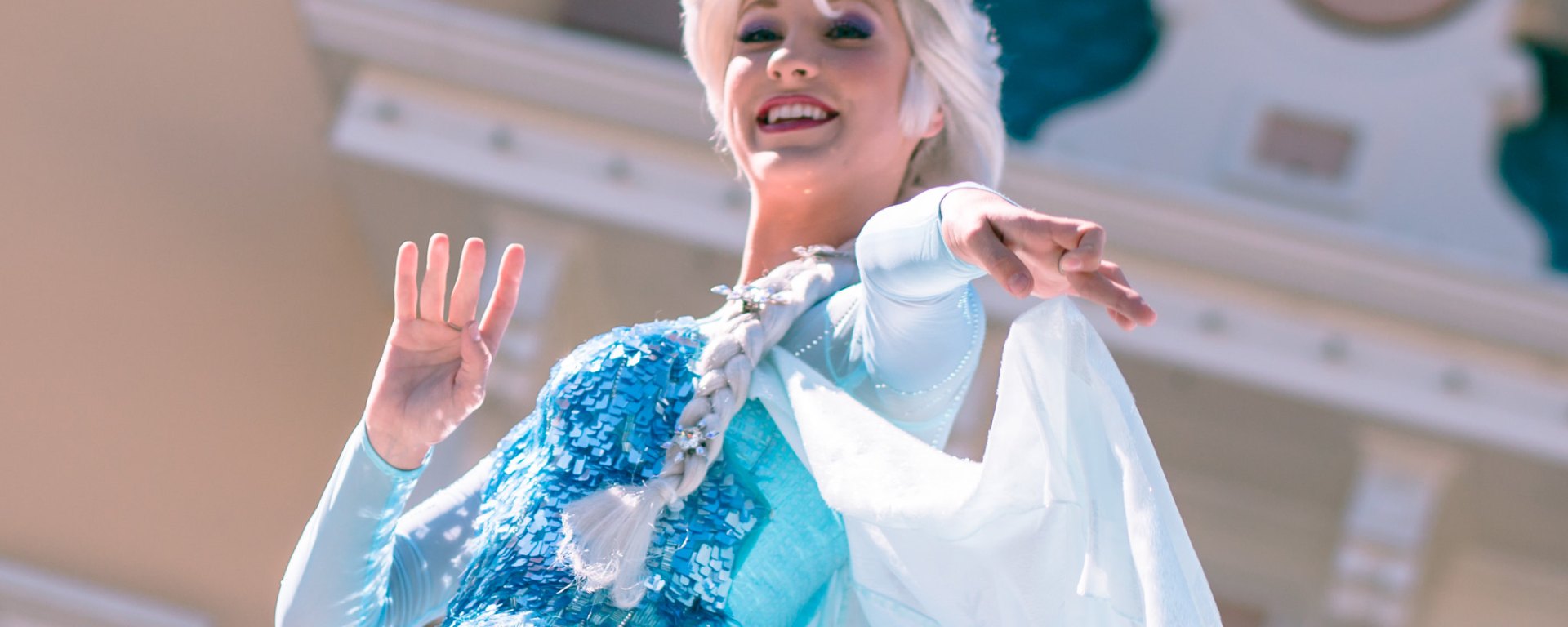
Header image: “Frozen | Into the Magic” by chris.alcoran is licensed under CC BY-NC-ND 2.0.
 The Pine Needle